
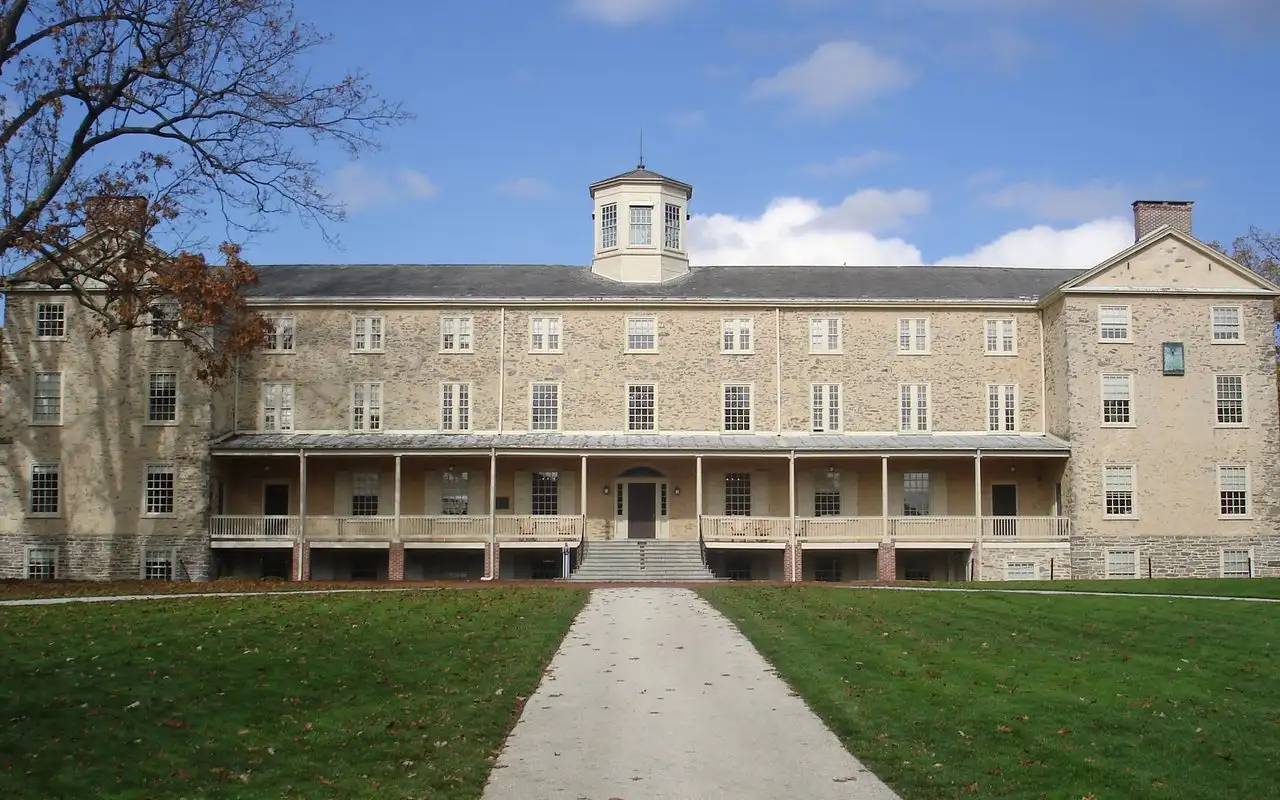
Built big, built early
Haverford’s story starts with the railroad. From the late 1870s, Pennsylvania Railroad executives following Alexander Cassatt built large homes along the line, and the town has kept that scale ever since. Haverford College, the Merion Cricket Club and its Frank Furness clubhouse, and the station area give it an older, settled feel. Our trucks come out Montgomery Avenue from Bala Cynwyd, about fifteen minutes away.
Zones and more than one system
Big houses are rarely heated or cooled by one simple system. Heating is often split into zones, each with its own thermostat and valve, and when one of those valves sticks, part of the house goes cold while the rest stays warm. Cooling usually takes two or more systems to keep every floor comfortable. That makes regular maintenance worth more here than in a smaller house: several systems means several chances for a small problem to turn into a no-heat call, and a spring and fall tune-up catches most of them early.
Converting from oil
Some older Haverford homes still burn oil. Switching to gas is a common project, and the old tank is part of it. On the Haverford Township side, tank removal needs its own permit in addition to the mechanical permit for the new equipment. On the Lower Merion side, an abandoned underground tank has to be removed by a DEP-certified contractor under a township building permit. We price the whole job, tank included, so the numbers you compare are complete.
Haverford, not Havertown
The names are close and the towns are neighbors, but they’re different places with different ZIP codes. Haverford (19041) crosses two townships. Havertown (19083) sits within Haverford Township to the south. We serve both, and we check which one an address is in before we file anything.
Cooling an older estate
Haverford’s older homes were built long before air conditioning, and many still have radiator heat with no ductwork. Cooling them well usually means combining approaches, such as an attic air handler for the bedrooms upstairs and separate systems for additions. We look at how each part of the house is used before recommending anything, so you’re not paying to cool rooms nobody sits in.